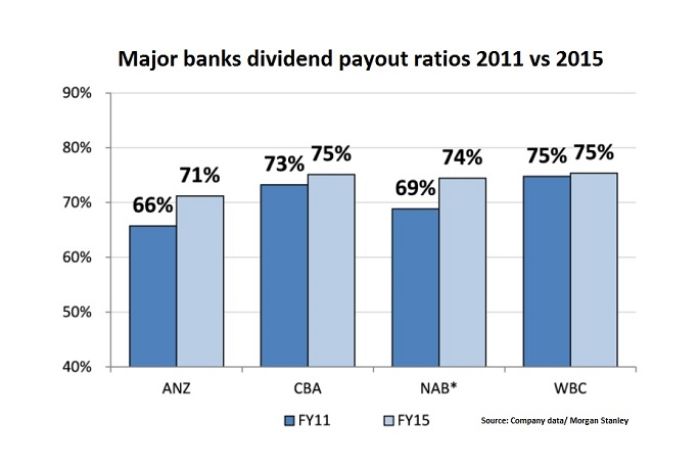
It saddened Australia and the story needs more coverage to hopefully prevent this occurring to more families across the nation. The suicide of fourteen year old Amy 'Dolly' Everett due to online bullying is a disgrace; how could a young life be cut so short? How could a person feel they have no other option but to take their own life to stop the cyber-bullying?
The way the family have conducted themselves during this ordeal has won the respect of the county to raise awareness of teenage suicide. I am personally full of respect for the family and I can not feel or comprehend the loss they suffered.
Her father, Tick Everett invited the cyber bullies to the funeral to witness the complete devastation they had caused their family. This challenge is not made out of anger or hate, but so they could comprehend the consequences of their actions to prevent future occurrences - he wants this cycle of cyber abuse to stop.
He, along with wife Kate and sister Meg has been very vocal openly discussing his daughter's suicide because he doesn't want another family to go through the same devastating loss they are going through.
The Everett family has launched an online campaign to raise awareness of cyber-bullying and harassment. I feel I should also do my part, however small, to help raise awareness of the effects of cyber-bullying.
The Everett family and friends has established a foundation via a GoFundMe fundraiser page to provide financial support to charities through promotion and discussion to recognise cyber-bullying to prevent the devastation of this loss afflicting other families; the page is https://www.gofundme.com/dollys-dream-foundation
Lifeline 13 11 14
Suicide Call Back Service 1300 659 467
Kids Helpline 1800 55 1800
Tuesday, 16 January 2018
Saturday, 13 January 2018
Reporting wrongdoing is not vexatious - it is a requirement
It is not vexatious to report misappropriation of government funds and/or corruption; in fact, it is the duty of every public officer to report inappropriate dealings, actions or behaviour. In the public sector, we actually undertake training so as to understand and identify such behaviour so as to not inadvertently commit an act of wrongdoing and believe I am acting within the scope of this training.
The purpose of ethical decision making is to train staff to identify inappropriate behaviour, the risk to the organisation and the community as a whole. I am loathe to use the term fraud as the requirements involve receiving a personal financial gain, that will all come out in an investigation. The onus then falls onto me to prove my claim against an individual and I am not targeting any individual; that is not my intent, my purpose is to protect the organisation and the public who is served by the organisation.
I am attempting to keep this issue in-house; but you argue, hey, you are writing about it on your blog. True, I am also taking a series steps to keep my government department anonymous as my wish is to avoid reputation damage to my employer. My blog is Observations in an Undemocratic World and deals with such issues since I began this blog back in 2013.
It is true I write about my anonymous organisation so they feel they are under pressure to act and not become involved in a cover-up - this is entirely my intention. I am aware they cyber-stalk me reading my blog as this discussion has come up on a number of occasions. But since I do not identify my employer, they won't take formal action - I am almost daring them to so but they don't want this to become common knowledge.
The purpose of ethical decision making is to train staff to identify inappropriate behaviour, the risk to the organisation and the community as a whole. I am loathe to use the term fraud as the requirements involve receiving a personal financial gain, that will all come out in an investigation. The onus then falls onto me to prove my claim against an individual and I am not targeting any individual; that is not my intent, my purpose is to protect the organisation and the public who is served by the organisation.
I am attempting to keep this issue in-house; but you argue, hey, you are writing about it on your blog. True, I am also taking a series steps to keep my government department anonymous as my wish is to avoid reputation damage to my employer. My blog is Observations in an Undemocratic World and deals with such issues since I began this blog back in 2013.
It is true I write about my anonymous organisation so they feel they are under pressure to act and not become involved in a cover-up - this is entirely my intention. I am aware they cyber-stalk me reading my blog as this discussion has come up on a number of occasions. But since I do not identify my employer, they won't take formal action - I am almost daring them to so but they don't want this to become common knowledge.
Thursday, 11 January 2018
CEO pay packets back in the spotlight
With CEO pay-packets and bonus schedules back in the public domain after Apple's Tim Cook received a 74% increase in pay. Cook had a base salary of $3.06 million, incentive pay of $9.33 million and and equity award of $89.2 million to bring his pay to $102 million.
I believe entrepreneurs taking the full personal risks to start and build the company should benefit financially. My issues arise from CEOs who are hired to run a business don't have a personal stake in the success of the business. These CEOs aren't taking any personal risk as they receive golden handcuffs initially with their real risk more concerned with missing out on their potential bonus.
With such a rewards system in place, they are not inclined to make decisions in the long term interests of the business owners - the shareholders. Then, if it doesn't work out then they are endowed with a golden parachute so they don't lose. Then there is the Apple battery scandal, shareholders would be very concerned as to what this is going to cost? Pretty poor to be receiving such a bonus when there could be lawsuits pending.
Tuesday, 9 January 2018
An Australian recession - not just yet
Heading into 2018, the US bull market run continues, the American price earning multiples are increasing but people are getting nervous but with the low interest rate environment and lag effects of the quantitative easing that poured large amounts of money into the financial sector - the risks increase. One expects US tax cuts to fuel the party for another two or so years - then what?
Down over the other side of the Pacific Ocean, the Australian index has not eclipsed the 2007 highs and although the Australian economy didn't melt down like the US or Europe as Chinese demand kept Australia from recession. Ten years on, the XJO, that is the S&P/ASX200 is sitting just over 6000 points still below the October 2007 high of 6700 points before plunging to just over 3000 in March 2009. No recession maybe, but we felt wealth destruction without the rebound but fortunately not on an American scale.
We still have soft conditions with low wages growth; the major concern to the economy being the high personal household debt. With non-mining business continuing to improve we are finally seeing increased business confidence. When we get some decent wages growth we should see improvement in the retail and services sector and increased jobs. The bright side is we don't appear to be hemorrhaging jobs anymore as jobs growth is improving; even if full-time jobs are being replaced with part-time work, at least an income is coming in. Easy to say for a person who maintained full-time employment through the whole GFC saga and beyond.
Down over the other side of the Pacific Ocean, the Australian index has not eclipsed the 2007 highs and although the Australian economy didn't melt down like the US or Europe as Chinese demand kept Australia from recession. Ten years on, the XJO, that is the S&P/ASX200 is sitting just over 6000 points still below the October 2007 high of 6700 points before plunging to just over 3000 in March 2009. No recession maybe, but we felt wealth destruction without the rebound but fortunately not on an American scale.
We still have soft conditions with low wages growth; the major concern to the economy being the high personal household debt. With non-mining business continuing to improve we are finally seeing increased business confidence. When we get some decent wages growth we should see improvement in the retail and services sector and increased jobs. The bright side is we don't appear to be hemorrhaging jobs anymore as jobs growth is improving; even if full-time jobs are being replaced with part-time work, at least an income is coming in. Easy to say for a person who maintained full-time employment through the whole GFC saga and beyond.
Saturday, 6 January 2018
Bank dividends and pay-out ratios
There has been plenty of criticism of banks in Australia with a special emphasis on the big four banks of the Commonwealth Bank of Australia (CBA), the Australian and New Zealand Banking Corporation (ANZ), Westpac Banking Corporation (WBC) and the National Australia Bank (NAB). Looking into banking misconduct will be the role of the Royal Commission; one expects some poor practices to come to light with some improvements required. Despite the popular opinion, the banking and finance industry is pretty stable in Australia.
Bank pay-out ratios are high, really high. This is the dividend paid to shareholders from profits with ANZ sitting at 71%, NAB is 74%, CBA is 75% and WBC is also 75% of profits paid to shareholders. Then the argument reverts to greedy shareholders taking all the money that should be the people's money. Hang on, the federal government once attempted to nationalise the banks directly after world war and spent the next twenty five years out of government, so this isn't the answer.
Banks are commercial entities and make profits; they are also the nation's largest corporate taxpayers with CBA paying $3.3 billion in tax. This was followed by WBC with $3 billion, NAB with $2.4 billion and ANZ paid $2 billion paid in tax. Approximately 168,000 people are employed in the banking sector in Australia with the finance and insurance sector the 11th largest employer in the country.
So who are the shareholders? To begin with, anybody who has held employment over the past 25 years or so will be holding money in a superannuation account of some form. The default plan for a superannuation fund is a balanced plan generally holding approximately 25% of their assets in Australian equities. The superannuation funds of Australia are the majority owners of Australian banks with the members of the funds collectively owning the assets of the fund.
The big four banks lead the top four positions in the Standard & Poor's ASX 200 index in terms of market capitalisation with CBA making up 9.25% of the index, WBC the second largest bank accounts for 6.9% of the index, ANZ makes up 5.5% and the smallest of the the big four banks is NAB with 5.25% comprising of approximately 27% of the value of the Australian sharemarket.
So we are the shareholders and the profits are paid out to our retirement accounts. The average worker has the ability to contribute extra funds to their superannuation fund through salary sacrifice increasing their retirement benefits. But most prefer to spend it now and rely on the aged pension instead, then complain when the federal government raises the pension age as the country can't afford it.
Alternately, salary earners could directly purchase shares in banks or other investment opportunities but mostly chose not too. Instead of wagering cash on horses down the racetrack, lotto, poker machines or at the casino maybe people would be better off investing their excess funds for their future and cut down on cigarettes and alcohol to make some savings. I have done some calculations for some broke work colleagues and their nicotine habit finding they could have doubled their retirement accounts by diverting their smoking habit to investment funding.
I left school early after just turning sixteen to start an apprenticeship and I was able to take a part time evening class at my local TAFE, the Americans would know this as Community College, to learn the basics of the sharemarket. So if I am able to find the time as a guy who didn't finish high school I am sure plenty of others are capable of a little study.
This included purchasing some books and doing some extra curricula reading. If you can't afford to purchase books then the library is the answer as long as you are putting in the effort to invest in yourself. If you can't be bothered to put in the effort, then don't complain when you have to work until seventy.
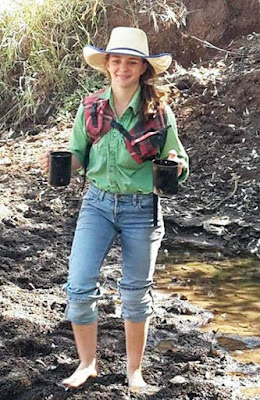
Bank pay-out ratios are high, really high. This is the dividend paid to shareholders from profits with ANZ sitting at 71%, NAB is 74%, CBA is 75% and WBC is also 75% of profits paid to shareholders. Then the argument reverts to greedy shareholders taking all the money that should be the people's money. Hang on, the federal government once attempted to nationalise the banks directly after world war and spent the next twenty five years out of government, so this isn't the answer.
Banks are commercial entities and make profits; they are also the nation's largest corporate taxpayers with CBA paying $3.3 billion in tax. This was followed by WBC with $3 billion, NAB with $2.4 billion and ANZ paid $2 billion paid in tax. Approximately 168,000 people are employed in the banking sector in Australia with the finance and insurance sector the 11th largest employer in the country.
So who are the shareholders? To begin with, anybody who has held employment over the past 25 years or so will be holding money in a superannuation account of some form. The default plan for a superannuation fund is a balanced plan generally holding approximately 25% of their assets in Australian equities. The superannuation funds of Australia are the majority owners of Australian banks with the members of the funds collectively owning the assets of the fund.
The big four banks lead the top four positions in the Standard & Poor's ASX 200 index in terms of market capitalisation with CBA making up 9.25% of the index, WBC the second largest bank accounts for 6.9% of the index, ANZ makes up 5.5% and the smallest of the the big four banks is NAB with 5.25% comprising of approximately 27% of the value of the Australian sharemarket.
So we are the shareholders and the profits are paid out to our retirement accounts. The average worker has the ability to contribute extra funds to their superannuation fund through salary sacrifice increasing their retirement benefits. But most prefer to spend it now and rely on the aged pension instead, then complain when the federal government raises the pension age as the country can't afford it.
Alternately, salary earners could directly purchase shares in banks or other investment opportunities but mostly chose not too. Instead of wagering cash on horses down the racetrack, lotto, poker machines or at the casino maybe people would be better off investing their excess funds for their future and cut down on cigarettes and alcohol to make some savings. I have done some calculations for some broke work colleagues and their nicotine habit finding they could have doubled their retirement accounts by diverting their smoking habit to investment funding.
I left school early after just turning sixteen to start an apprenticeship and I was able to take a part time evening class at my local TAFE, the Americans would know this as Community College, to learn the basics of the sharemarket. So if I am able to find the time as a guy who didn't finish high school I am sure plenty of others are capable of a little study.
This included purchasing some books and doing some extra curricula reading. If you can't afford to purchase books then the library is the answer as long as you are putting in the effort to invest in yourself. If you can't be bothered to put in the effort, then don't complain when you have to work until seventy.
Thursday, 4 January 2018
So, what's in the hang tank?
I was diving in Subic Bay in the Philippines at a pretty good dive centre and we were undertaking no-stop diving activities at deeper recreational depths. As a safety precaution, they suspended a hang tank at five metres for low on air situations - great stuff for recreational diving operations.
In their hang tank was a nitrox blend of 31% oxygen and entry-level divers with no nitrox certification were undertaking dives - was there an issue here? I would suggest the answer is no as a blend of EAN31 has a partial pressure of 0.15 ATA at 5 metres - that's pretty conservative. Referencing a CNS table, a partial pressure in the 0.6 range has a maximum CNS limit of 720 minutes. Generally most recreational divers undertake a safety stop for 3 to 5 minutes, that's not a huge uptake of CNS oxygen toxicity so at this point, who really cares?
Tuesday, 2 January 2018
A busy Saturday morning
The alarm screeched interupting my sleep at 4 am, a quick shower and packing up my motel room to make sure I am on the road at 4:30 heading east of the Kalgoorlie city limits before any traffic slows me down. It is still dark and I drive carefully heading towards the rising sun as I don't want to hit any wildlife, the hire car is attached to my personal credit card and has a $4000 excess.
I arrived on site at 5:15 with time to spare as I wanted to speak to the nightshift at their 5:30 to 6:00 shift handover meeting. I also needed to meet with two of their maintenance personnel before driving back to Kalgoorlie for the morning flight to Perth. I needed to meet with the As I had missed my pervious flight, I was empthatic that this wasn't going to happen again.
I had informed the skipper of the yacht I sail on of my movements, they were to wait at the jetty until a pre-determined time and depart without me if I couldn't make the deadline. My schedule was tight but I believed I could get to Royal Perth Yacht Club on time. I was lucky to get a taxi straight away as I needed to get home, get changed out of my drill press work clothes and into my sailing whites.
Fortunately I live within a 15 minute drive away from Matilda Bay, if traffic conditions allow and I had envisioned any traffic delays I will be there on time. Dropping through the clouds as we descended, the flight was on-time so I have to quickly collect my bag from the carousel and straight to the waiting taxi - no sweat. I know I have a pretty good job when I am 600 km away and still able to get an afternoon sail in - life is good.
I arrived on site at 5:15 with time to spare as I wanted to speak to the nightshift at their 5:30 to 6:00 shift handover meeting. I also needed to meet with two of their maintenance personnel before driving back to Kalgoorlie for the morning flight to Perth. I needed to meet with the As I had missed my pervious flight, I was empthatic that this wasn't going to happen again.
I had informed the skipper of the yacht I sail on of my movements, they were to wait at the jetty until a pre-determined time and depart without me if I couldn't make the deadline. My schedule was tight but I believed I could get to Royal Perth Yacht Club on time. I was lucky to get a taxi straight away as I needed to get home, get changed out of my drill press work clothes and into my sailing whites.
Fortunately I live within a 15 minute drive away from Matilda Bay, if traffic conditions allow and I had envisioned any traffic delays I will be there on time. Dropping through the clouds as we descended, the flight was on-time so I have to quickly collect my bag from the carousel and straight to the waiting taxi - no sweat. I know I have a pretty good job when I am 600 km away and still able to get an afternoon sail in - life is good.
Subscribe to:
Posts (Atom)