Pages

Thursday, 29 September 2016

Taipei - well maybe

As a Asian traveler, I really need to visit the major centres of the region at least once in my life, so Taipei needs to be placed on the list. I hadn't thought much about Taipei until friends of mine were considering moving there to live for a number of years, they have visited a number of times and really liked the place.


So what did I know about Taipei? Not much really, I knew this was an ultra modern city equipped with a pretty formidable navy, this tiny nation wasn't going to take any backchat from China despite kind of being of Chinese origin. As a child and later as a teenager, we learned pretty quickly Taiwan was a manufacturer of all things cheap and nasty. So much to my embarrassment, I will have to plan a Taiwan trip with a distinct lack of knowledge, I hope to know a little about the country after spending a little time there.

Tuesday, 27 September 2016

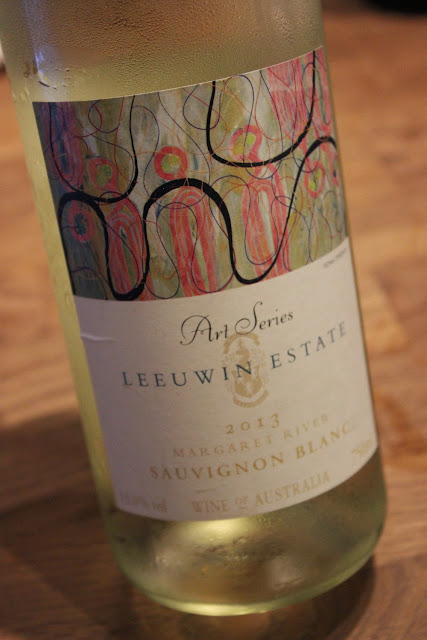
Leeuwin Estate 2013 sauvignon blanc

The Leeuwin Estate 2013 Art Series sauvignon blanc is an exceptional but pricey sav blanc, the tasting notes describe this outstanding example holding floral notes of jasmine and citrus blossom - that I detect. They go a little further citing lemon flesh, lime zest pink lady apples and blackcurrent - I'm struggling now. What I do get is a complex sav blanc that is one third matured in second hand barrels that doesn't detract from the fruit driven nature of this wine. 


So the tasting notes tell me the palate is tight and fine with generous persistence; tahitian lime, lemon curd, white nectarine and black pastilles combine together and are driven by a sparkling acid line. Furthermore, the delicate creaminess tand spice is threaded throughout the mid palate,offering depth, texture and length. Whoa, I know the professionals are at work but the question is, does a hack like me wish to part with the $30 for a sauvignon blanc when the trend is towards semillon and riesling or cheaper the pinot gris and classic white blends?

Saturday, 24 September 2016

Who uses dive tables anymore?

After reading numerous articles defending dive tables, I ask frequently myself "who really dives with tables anymore?" Once upon a time I dived with tables; I then learned that the feature rich dive computers are reasonably priced as opposed to what they were 20 years ago, I can now plan all types of dives on computers.


We all had to teach tables during entry-level courses; the majority of instructors knew they were just promoting the dive tables of the certification agency; then went and then went and dived with computers anyway. Dive centres want to sell dive computers, there is money in selling computers, the public wants to purchase dive computers but the dive certification agencies have promoted their dive tables so they don't miss out on this income stream. After all, there would be no dive computer sales if there was no demand. Dive computers work, dive computers tend to be more conservative than tables, monitor surface interval time, calculate repetitive dive times and monitor ascent rates - they do everything you need for effective dive planning.


Dive computers represent the latest technology combined with latest thinking in decompression theory and application. In the modern world, people are connected 24/7 via their personal technology; they carry around smartphones, tablets and electronic organisers - you can plan dives on your smartphone app and upload the dive plan to your dive computer via Bluetooth. These devices are also connected via cloud technology and upgraded frequently.


When were dive tables developed? The US Navy tables were developed in the late 1930s, upgrades in the mid 50s with further modifications in 1992. The PADI recreational dive planner was tested in the early 80s, BSAC tables were also developed in the late 80s, the IANTD tables were developed in the mid 90s and the upgraded NAUI RGBM tables were introduced in the early 2000s. The majority of tables were based on Haldane's 1908 research, that were tested on goats and later included in-water testing; Haldane's work provided the basis of decompression theory that is still used to this day.


Now the dive certification agencies have not developed dive computers, we know where their bias sits; they wish to promote their own product at the expense of modern methodology. With all their restrictions, who in their right mind dives with tables instead of a computer?

Thursday, 22 September 2016

The end of Google Chrome?

My choice of internet browser is Google's Chrome platform, I have downloaded it to every device I own, my work computer and every computer I use in the network. I read that Google is intending to eventually deactivate the Chrome network and implement the Android system for all systems - I hope not.


From a commercial viewpoint, I understand the financial realities of pursuing a separate operating system and internet browser but I hope this is only speculation as I am very much a Chrome convert. I find the browser has excellent functionality and I really enjoy the linking of Google services requiring only one log in, I just wish my employer linked their systems as I have multiple log-on for each program that expire frequently. This is less secure as you are frequently changing multiple passwords meaning they are written down where they can be accessed easily. I just hope these claims are exaggerated and they keep maintaining this platform for the indefinite future.

Tuesday, 20 September 2016

Are bonds worth the risk now?

The Reserve Bank of Australia cut interest rates to record lows in order to stimulate the economy, was this a wise decision? We are already burdened with a hot property market showing signs of overheating yet still defying financial gravity. Do we need to fuel further speculation?


Forget about retiring if you are considering living off the safety of cash, a number of my colleagues opted to convert their retirement savings from a balanced fund that included Australian shares, international shares, bonds, fixed interest, infrastructure, derivatives, venture capital and cash to 100% cash at the bottom of the cycle locking in losses. But what about bonds as a safe investment in turbulent times?

If you are able to subscribe and lock in a low coupon rate to a newly issued bond then you have a distinct advantage when the bond expires as you get your capital back and a return along the way. But as we are entering a sustained low growth period, equities are more risky and capital preservation is the key and bonds in such a low interest rate environment could well be a good investment.

Saturday, 17 September 2016

The PADI Master Instructor

Back in the mid to late 90s I was on a live-a-board dive boat from Marmaris to Fetheye on the southern coast of Turkey. I was backpacking and eventually heading through to the Red Sea to do some technical diving there. 


As such, I carried my IANTD Technical Nitrox certification card with me so I could prove my credentials for my expected technical diving activities. I learned that day, only offer up the minimum certification to PADI Instructors with a superiority complex. 

The dive leader, Murat, a PADI Master Instructor immediately mocked my c-card at check-in and proceeded to grab my logbook and flicked through it. He found a 60 metre dive in it and loudly proceeded to tell everyone how irresponsible I was, how I need lights a such a depth and my profile was not correct anyway.

I explained that the particular dive he was viewing was a square profile with air as the bottom mix, EAN36 as the travel mix and EAN80 as the deco mix - it was an accelerated deco. He then proceed to tell the open water dive students that such a dive was not possible and my log book was false. 

I explained how accelerated decompression works shortening decompression requirements. His equally clueless divemaster agreed with him and they both thought it was bullshit and continued to ridicule me for the whole week in front of the entry-level dive students.

It was then I learned he and his divemaster knew nothing about nitrox, I actually had higher dive credentials than our dive leader and he was feeling a little insecure - he wasn't nitrox certified as a PADI Master Instructor. 

Not that was really an issue with me as nitrox was relatively new then and unlike now, not many people were certified. This was unfortunate as I normally only carry my PADI Advanced Open Water c-card for identification 

I only had my highest level certification with me as this was prior to the days of internet and online checks and I intended to do some deep technical dives at the Blue Hole in Dahab.

The first dive was a check dive with Murat, what this turned out to be was a scuba review where we descended to a shallow depth, knelt on the bottom and then had to run through the basic scuba skills taught on the entry level course and then surfaced. 

Upon surfacing, I complained to Murat that this was not a dive, I paid for a ten dive package at two dives per day over five days. After a heated argument, he relented and agreed this short descent to five metres did not constitute a dive and would not be counted towards my ten dives. He did not keep his word and did indeed count this as one of my ten dive package.

As there were only three certified divers on board, we dived together with the divemaster as the guide. I quickly learned why the divemaster questioned and then berated my diving experience - his skills were lousy. He couldn't navigate, he had no knowledge of the local marine life, possessed terrible buoyancy and went through air at an alarming rate.


During the week of diving, I never returned to the surface with less than 100 bar in my cylinder, we always had to swim back on the surface as we could never find the boat the profiles were slipshod. We never found the features underwater that were explained in the briefing (he could do that ok) that were marked on the underwater charts. 

We would be told we would go to a feature such as a cavern during the briefing, what would really happen was we would swim around for the whole dive looking for the cavern, wreck or reef. He would then get low on air, we would ascend and then swim back to the boat on the surface.

The final dive of the week was a dive together with the newly certified open water divers as a group. I already knew Murat was authoritarian to feed his ego and cover his insecurities. I soon learned why he was so dismissive of me. 

His ability to talk a good dive on the surface was not matched by his ability to execute the skills underwater. So I learned that while he was quick to tell everybody a PADI Master Instructor was the top level of instructor, I learned that this was really a purchased level awarded by course attendance.

So what did I learn? As a backpacker, I carried the minimum amount of gear with me then and still do today. But come on, how much weight and room would my PADI Advanced Open Water certification card taken up? 

Now, I only give the minimum certification requirement, don't have a logbook and certainly never list my deepest dive on the paperwork or correct number of dives, I generally only list 100 dives. Now that technical diving is relatively mainstream, it isn't seen as mysterious as it once was. I have never made that mistake again.

Thursday, 15 September 2016

Warren Buffett - the master of value investing

Warren Buffett, the world's most successful investor known as the Oracle of Ohaha is first and foremost a value investor. Learning from the master of value investing, Benjamin Graham of Colombia University, Buffett is the world's most famous investor through investment vehicle Berkshire Hathaway Inc. 


Value investing generally involves purchasing equity securities appearing to be under-priced by fundamental analysis. Such securities are usually shares in public companies trading at discounts to tangible book value, holding high dividend yields with low price-to-earnings multiples. Naturally, a working knowledge of corporate finance is essential; the time to research the market and the tools to undertake such analysis.

Whilst value investing is a long term strategy, some criticism has arisen, especially in the form of growth stocks. Over the years, Buffett has apologised to investors for poor returns especially in bull markets when he has appeared to miss the boat; he has been venerated after the dot.com tech wreck and the sub-prime crisis that have all but wiped out the herd mentality of the bull market.